


Supply Chain Management
Supporting the Sustainable Development Goals
The Company is committed to managing its supply chain with sustainability and resilience by integrating ESG factors into its comprehensive procurement processes under the Supply Chain Management Policy. The Company recognizes its business partners as vital allies and key stakeholders. Accordingly the Company prioritizes mutual development and growth rather than focusing only on risk monitoring or evaluation. The Company aims to be a leader that shares sustainability knowledge enhances supplier capabilities and drives the advertising media industry to grow together robustly and sustainably.
To ensure that business collaboration is conducted ethically transparently equitably and fairly the Company has established a Supplier Code of Conduct as a clear framework and set of guidelines. This works in conjunction with a systematic supplier assessment process encompassing new supplier screening critical supplier identification and the monitoring and auditing of suppliers with high ESG risks.


Goals and Performance Highlights
| Sustainability Targets | 2025 Performance | |
|---|---|---|
| Long term (2026-2030) | Short term (2026) | |
| 100% of business partners signed the Supplier Code of Conduct covering economic social and environmental operations. | Maintain a 100% rate of business partners signing the Supplier Code of Conduct addressing economic social and environmental dimensions. | 100% of all suppliers have acknowledged and accepted the Supplier Code of Conduct guidelines. |
| Expand training and strategic partnerships to encourage suppliers to reduce environmental impacts across the value chain. | All critical suppliers undergo continuous ESG performance assessments. | 100% of all critical suppliers completed ESG risk assessments with none identified as having high ESG risks. |
| Increase the proportion of eco friendly procurement such as recycled vinyl and energy efficient LED screens to reach 20 percent of total procurement value. | Establish and implement a Green Procurement List as a primary criterion for supplier selection. | |
| Encourage key pilot suppliers to participate in organizational carbon footprint assessment initiatives. | ||

Goals and Performance Highlights
Commitment, Challenge And Opportunity

Commitment
- Strive to establish a comprehensive, transparent risk management system aligned with international standards
- Promote a risk-aware culture that encourages participation and accountability from employees at all levels
- Continuously enhance processes for monitoring, assessing, and managing risks to support organizational sustainability and stakeholder interests

Challenges
- Integrating risk management with business strategy to ensure alignment and value creation, rather than merely focusing on damage prevention

Opportunities
- Foster innovation and adaptability by leveraging data and proactive risk analytics to identify new pathways for growth
- Enhance confidence among investors, customers, and business partners through a transparent and effective risk management system
Management Approach
These factors compel Plan B to prioritize resilience within its supply chain management system and collaborate with business partners to manage positive and negative economic environmental and social impacts. This includes addressing indirect greenhouse gas emissions throughout the value chain (Scope 3 Emissions) and ensuring fair treatment of partners to prevent human rights violations. Potential impacts include natural resource depletion community pollution or unfair labor practices by suppliers. Plan B strictly enforces the Supplier Code of Practice and evaluates sustainability risks via the CROSS Procurement digital platform. This system enhances supply chain data visibility and efficiently monitors supplier compliance. It is essential for identifying latent risks and facilitating proactive business continuity management.


Plan B defines its supply chain management strategy and supplier guidelines to ensure systematic oversight. The Company has fully integrated key sustainability factors into its procurement processes in alignment with ISO 20400 Sustainable Procurement as follows:


Supply Chain Management Strategy
Plan B has elevated its procurement strategy to align with its vision as the leader in Out of Home OOH media. The Company implements five proactive strategies to drive sustainability as follows:
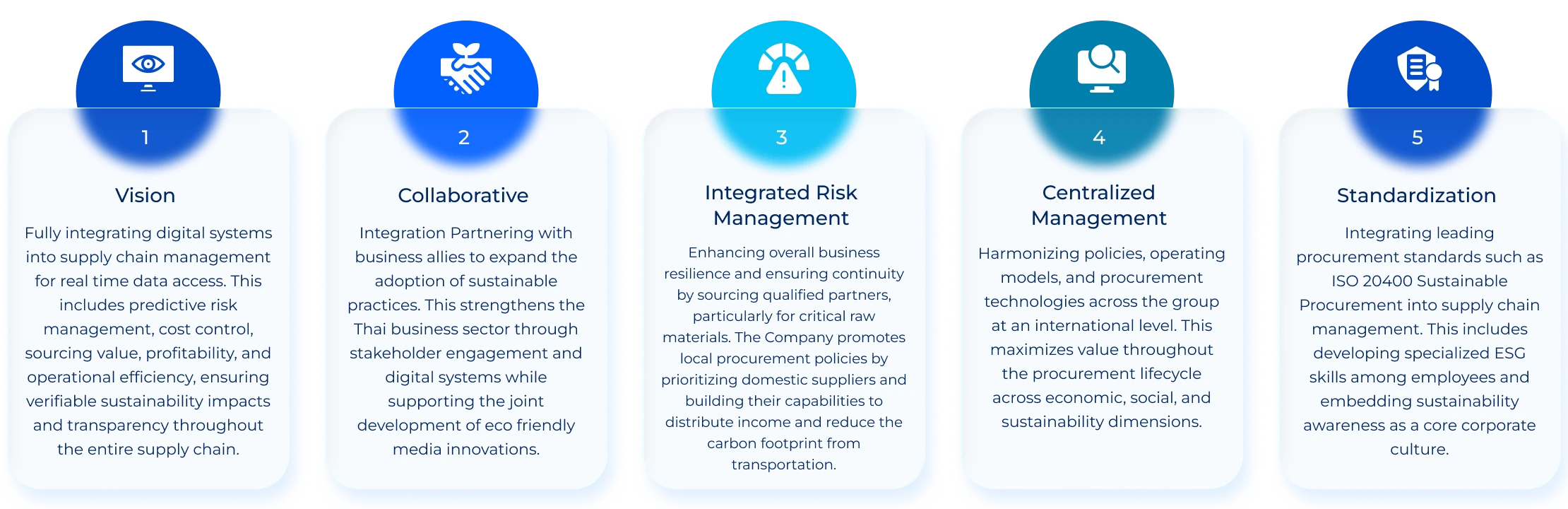
Integration of Sustainability Factors into Procurement
The Company prioritizes supply chain sustainability by integrating governance, human rights, environmental, and business ethics principles into its end to end procurement process. This ensures responsible growth alongside business partners through the following framework:

1. New Supplier Registration
- Supplier Code of Conduct The Company establishes a Supplier Code of Conduct aligned with international human rights, environmental, and labor standards. This serves as a primary requirement that all suppliers must acknowledge and sign before commencing any business transactions.
- Sustainability Risk Assessment Before registration, suppliers must undergo a preliminary ESG risk assessment considering business information, product or service categories, industry specific risks, and geographical locations.
2. Supplier Qualification
- Detailed Sustainability Assessment Selected suppliers undergo an in depth sustainability evaluation using ESG questionnaires and self assessment systems covering labor practices, safety, environment, and governance.
- External Certifications The Company encourages suppliers to provide evidence of international certifications such as ISO 14001, ISO 45001, SA8000, or other relevant standards to verify their commitment to sustainability.
- On site Supplier Audits Random inspections and site visits are conducted to verify compliance with requirements and provide concrete recommendations for improvement.
3. Bidding and Tendering
- ESG as Selection Criteria Sustainability factors such as waste management, resource efficiency, and labor standards are integrated into the evaluation criteria for bidding and tendering. These are considered alongside price and quality to promote socially and environmentally responsible competition.
4. Performance Evaluation
- Annual Performance Review The Company conducts supplier performance evaluations at least once a year, focusing on on time delivery, product or service quality, and compliance with ESG requirements.
- Document Verification Suppliers must submit performance reports or documentation such as environmental audit reports, safety records, and labor training logs upon request to ensure transparency and traceability.
- On site Audits If risk indicators are identified, the Company will perform additional on site audits to review compliance and identify immediate corrective actions.
5. Collaboration for Corrective Actions
- Corrective Measures for Non Compliance Upon detecting any violation of sustainability guidelines, the Company issues a warning notice with improvement recommendations and monitors progress within a specified timeframe. Failure to improve may lead to temporary or permanent suspension of cooperation.
6. Supplier Capacity Building
- Non tier 1 Supplier Management Recognizing the importance of secondary suppliers, the Company has initiated data collection and risk management for this group to ensure sustainability across the entire supply chain.
- Business Continuity Risk Management The Company analyzes and monitors risks that could disrupt procurement, such as natural disasters, logistics crises, or environmental events, to develop joint emergency response plans.
- Sustainability Impact Management The Company encourages suppliers to enhance their ESG capabilities by developing improvement plans aligned with corporate sustainability goals, fostering strong and long term partnerships.
Sourcing and Supplier Selection Policy
The Company maintains a sourcing and supplier selection policy rooted in equality and fairness while prioritizing the Company’s best interests. This policy is built on the foundation of mutual benefits and sustainable development to foster confidence among all stakeholders. Under the Procurement Policy, the Company ensures excellence, transparency, and fairness through a procurement management framework aligned with international standards.

The supplier selection process considers reputation, capability, expertise, financial stability, and legal compliance. It emphasizes equitable treatment, transparency, and business integrity. The Company is committed to fulfilling contractual obligations and strictly adhering to its Code of Conduct through the following guidelines:
All executives and personnel are responsible for supporting and strictly adhering to this procurement management framework. Operations must uphold human dignity, equality, and fairness without discrimination based on physical or mental conditions, race, nationality, religion, gender, age, or education to promote a culture of diversity, equity, and inclusion.
Supplier Selection Criteria
Selecting high-quality business partners is essential for fostering sustainable growth. Consequently, the Company prioritizes a fair and appropriate selection process to ensure alignment with established standards. Our criteria incorporate comprehensive risk assessments covering economic, social, and environmental dimensions arising from supplier activities. The key selection criteria are as follows:

-
Supplier Status
Business partners, including manufacturers, operators, distributors, service providers, or contractors, must maintain clearly verifiable and transparent business premises.
-
Resource Readiness and Operational Capability
Partners must possess adequate personnel, machinery, equipment, products, services, and warehousing facilities, alongside financial stability and a credible operating history to ensure long-term business continuity.
-
Performance and Reliability
Suppliers must demonstrate a satisfactory track record regarding product quality, service delivery, on-time performance, after-sales support, warranties, and strict adherence to mutually agreed contractual terms.
-
Legal Compliance and Business Ethics
Business partners must strictly comply with all relevant rules, regulations, and laws, operating with fairness, transparency, and accountability. They must have no conflicts of interest with the Company, no history of corruption or contract abandonment, and must not be blacklisted by government or private agencies in accordance with good corporate governance principles.
-
Social and Environmental Responsibility
Suppliers must demonstrate a commitment to social and environmental responsibility, covering human rights, labor practices, business ethics, and environmental compliance, while striving to mitigate environmental impacts in line with sustainable development pathways.
The Company reviews and updates these supplier selection criteria at least once a year, or upon significant contextual or legal changes, to ensure alignment with emerging risks and international standards. This process remains a vital component of the Company’s sustainable procurement strategy, promoting transparency, fairness, and accountability toward all stakeholder groups.
Criteria for New and Existing Supplier Identification
The selection of new and existing business partners must strictly adhere to the established corporate criteria, focusing on qualification and classification standards. This process is fully aligned with procurement policies, supplier engagement practices, and the integrated supply chain management framework. Furthermore, suppliers must demonstrate a firm commitment to social and environmental responsibility through an initial ESG screening that encompasses human rights, labor welfare, business ethics, and environmental legal compliance. All suppliers are also required to acknowledge and comply with the Company’s Supplier Code of Conduct to ensure mutual alignment and a shared commitment to sustainable development.

Supplier Segmentation Criteria and Critical Non-Tier 1 Supplier Assessment Guidelines
The Company utilizes a Centralized Procurement system to enhance cost efficiency, quality control, and transparency. Clear Supplier Segmentation criteria for direct Tier-1 suppliers are defined based on risk levels, procurement value, and strategic significance, categorizing them into Critical, Non-Critical, and General Suppliers with tailored risk management approaches.
To ensure comprehensive oversight and transparency, the Company extends its management scope to Critical Non-Tier 1 Suppliers. These include entities deeper in the supply chain, such as raw material manufacturers or subcontractors for critical suppliers, whose performance is vital for business continuity and supply chain risk mitigation.

To maintain effective and comprehensive procurement management, the Company has established a systematic segmentation framework based on risk levels, contract value, strategic importance, and substitutability, with assessment guidelines as follows:
-
Critical Suppliers
Suppliers with high contract value, significant spend, and low substitutability that are essential for revenue generation and carry high risk profiles. The Company mandates annual performance reviews through Vendor Evaluation Forms, On-Site Audits, and sustainability assessments, particularly for categories such as LED displays.
-
Non-Critical Suppliers
Suppliers with moderate spending or low contract value and medium to low risk levels. They undergo annual reviews via Vendor Evaluation Forms and Vendor Self-Assessments, covering areas such as construction, spare parts, IT services, and consumables.
-
General Suppliers
Suppliers with relatively low transaction values and minimal business risk. Given their high substitutability and low impact on operations, assessments are conducted on a case-by-case basis rather than annually.
-
Critical Non-Tier 1 Suppliers
Entities that do not supply the Company directly but play a vital role within the supply chain of Critical Tier 1 suppliers, such as producers of essential components or key sub-suppliers.
The Company identifies and classifies Critical Non-Tier 1 Suppliers based on the following criteria:
-
Direct connection to Critical Tier-1 Suppliers
with a significant role in production or services, such as LED panel manufacturers, key raw material providers, or specialized subcontractors.
-
High difficulty in short term
substitution or limited market alternatives.
-
History of operational disruptions impacting Critical Tier 1 suppliers or Company deliveries
such as delays, supply shortages, or quality deviations.
-
Operations located in high risk regions
including areas prone to geopolitical tensions, natural disasters, or regulatory uncertainty that could disrupt the supply chain.
Risk Management and Assessment Guidelines for Critical Non-Tier 1 Suppliers
To facilitate effective risk management planning and collaborative engagement with business partners, the Company has established guidelines for monitoring and managing relationships with this supplier group as follows:

-
Coordinate with Tier 1 suppliers to obtain supply chain data for mapping purposes
such as identifying key subcontractors or primary raw material manufacturers.
-
Conduct preliminary risk assessments through indirect evaluation
using questionnaires focusing on quality environmental management labor law compliance and sustainability practices in collaboration with relevant Tier 1 partners.
-
Periodically monitor and audit risks alongside Tier 1 suppliers
particularly when risk indicators arise such as delivery delays quality issues or human rights violations within the supply chain.
-
Integrate assessment protocols with Tier 1 on site audits or supplier meetings
by incorporating risk topics related to subcontractors or secondary suppliers into the evaluation forms.
Systematically identifying and managing Critical Non Tier 1 suppliers enables the Company to perform comprehensive end to end supply chain risk management and develop appropriate response plans. This approach supports business continuity mitigates the likelihood of unforeseen incidents and promotes long term sustainability for the Company and its partners across all levels.
Acknowledgment and Acceptance of the Supplier Code of Conduct
The Company mandates that all new suppliers acknowledge, accept, and sign the Supplier Code of Conduct strictly prior to commencing any transaction or procurement activities within the Pre-qualification Process. This requirement ensures mutual alignment, reinforces a commitment to transparent business operations, and establishes a robust foundation for collective sustainable growth.
Following this commitment in 2025, 100 percent of both new and existing suppliers successfully acknowledged and signed the Supplier Code of Conduct. This achievement reflects the Company's progress in effectively driving Environmental, Social, and Governance (ESG) standards across the entire supply chain.

Supplier Risk Factors
Strategic Risks
-
Risk of Customer Contract Non-Renewal
The Company enters into service agreements with customers for durations of one year or longer. Should customers fail to renew these contracts upon expiration, the Company may face revenue loss and reduced profitability. Recognizing this risk, the Company prioritizes superior service delivery to enhance customer satisfaction and secure renewals. Furthermore, the Company consistently expands its customer base to mitigate potential impacts from non-renewal.
-
Risk from Inability to Renew or Termination of Land Leases and Concessions
A significant portion of the Company’s advertising media is situated on third-party land or utilizes assets under concession agreements. Failure to negotiate renewals or premature termination of such agreements could disrupt service delivery and adversely affect financial performance. To safeguard against these risks, the Company primarily secures long-term agreements to ensure operational continuity.
-
Sourcing Risk Management
The Company evaluates supplier risks by considering environmental, social, and governance (ESG) impacts through a comprehensive four step criticality analysis as follows:
1) Spend analysis covering all procurement categories and expenditure for all high-spend suppliers.
2) Supplier ESG risk assessment focusing on identifying corporate sustainability risks within the procurement process, such as the use of child labor.
3) Supplier criticality analysis based on the following criteria:
- High transaction value with the supplier
- Components or services essential to the Company’s operations
- Low substitutability where alternative providers are unavailable
4) Development of impact mitigation measures based on risk assessment and criticality analysis to ensure readiness in managing high-risk and high-criticality suppliers, with measures defined as follows:
- Critical Suppliers refer to suppliers with high expenditure and very high or high risk levels, or those providing products that are difficult to substitute. These suppliers are subject to annual audits, including site visits. Furthermore, such suppliers must establish corrective action plans to mitigate potential risks and severity, ensuring risk management remains at a level that prevents adverse impacts on the business, community, and environment.
- Non-Critical Suppliers refer to suppliers with moderate to low expenditure and risk levels. These suppliers must undergo vendor evaluations or sustainability performance audits and pass assessments conducted by relevant departments, such as end-user or related units.
Operational Risks
-
Risk from Information Technology System Stability
The Company integrates technology into its services to optimize operational efficiency. Significant system failures, such as data loss or cyberattacks, may disrupt operations. To safeguard against this, the Company maintains efficient and adequate backup systems to prevent data damage.
-
Risk of Delayed Product Delivery from Suppliers
Service contracts typically define specific delivery schedules. Failure to deliver products to customers within the stipulated timeframe may result in penalties and compensation, impacting revenue and profitability. Moreover, delays could harm corporate reputation and customer trust, leading to lost business opportunities in the future.
Regulatory Risks
-
Risk from Business Operations under Concession Agreements with Government Entities
The Company enters into numerous contracts with both public and private sectors, such as land leases for media installations. Discrepancies may arise regarding the interpretation of contractual terms or conditions. Furthermore, the Company cannot guarantee that government authorities will not modify concession policies or scope, as such decisions are based solely on the discretion of the state.
-
Potential Financial Impact from Regulatory Compliance Costs
The Company operates under Thai laws and regulations governing environmental protection, as well as occupational health and safety. Consequently, the Group must maintain compliance with these standards, including the recruitment of specialized personnel to oversee legal adherence, equipment maintenance, and operational supervision. Future regulatory changes may necessitate operational adjustments and asset management updates, which could lead to increased expenditure.
-
Risk from Government or Relevant Authority Policies
The advertising media business is indirectly influenced by the policies of the government and relevant agencies. Government policies that could impact the Company’s operations include tax-related measures, such as adjustments to signboard tax rates.
Social and Environmental Risks
-
Climate Change Risk
Global emphasis on climate change and rising temperatures may lead to extreme weather events and natural disasters. Such incidents could disrupt the Company’s core operations, affecting advertising structures or causing supplier logistics delays that hinder timely product delivery.
-
Human Rights and Labor Practices Risk
Potential violations of labor laws or human rights by suppliers could significantly damage the Company’s corporate image and investor confidence. To mitigate this, the Company conducts continuous monitoring through rigorous assessments and strict enforcement of the Supplier Code of Conduct.
Supplier risk assessments encompass economic, social, and environmental dimensions
| Supplier Risk Assessment | ||
|---|---|---|
| Economic Dimension | Social Dimension | Environmental Dimension |
|
|
|
|
|
|
|
|
|
|
||
Risk Management Process
The Company prioritizes systematic risk management aligned with international standards, which is essential for navigating business uncertainties and continuous change. This approach ensures the achievement of established objectives and targets while enhancing competitiveness, fostering business growth, and creating new opportunities. Furthermore, it safeguards the interests of all stakeholder groups. The risk management process at the business unit and departmental levels comprises the following steps:
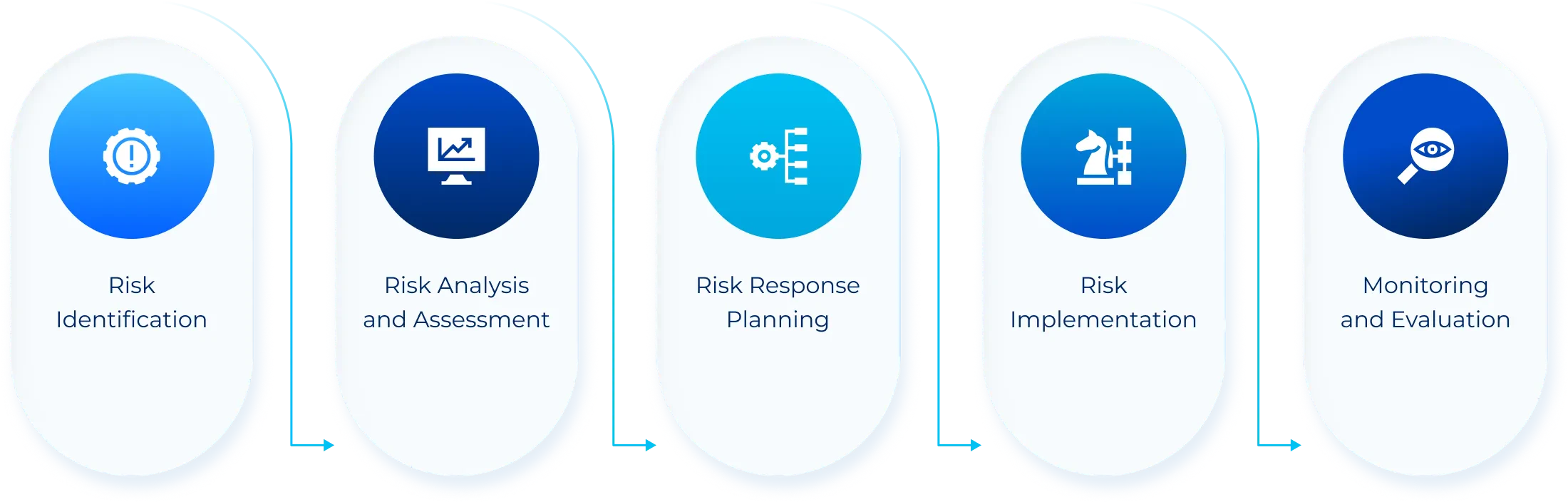
-
Risk Identification
Identifying and gathering factors or events that could impact organizational operations, arising from internal sources such as management, personnel, and systems, and external factors such as economic, political, legal, and environmental conditions. Identified risks encompass strategic, operational, financial, and compliance categories, including the assessment of emerging risks and sustainability (ESG) risks to ensure comprehensive and rigorous oversight.
-
Risk Analysis and Assessment
Analyzing the root causes and contributing factors of risks, while evaluating the likelihood of occurrence and potential impact through both qualitative and quantitative methods. Risks are prioritized and categorized by severity relative to the organization’s risk appetite, enabling the selection of appropriate management strategies for each risk type.
-
Risk Response Planning
Developing and selecting strategies or measures to address assessed risks, including risk avoidance, reduction, transfer, or acceptance for risks within controllable levels. The selection of these measures considers resource availability, cost-effectiveness, and the overall impact on organizational goals.
-
Risk Implementation
Executing risk management plans across all relevant parties according to their roles and responsibilities. This includes establishing appropriate internal control systems, facilitating internal communication to raise awareness, and fostering a robust Risk Culture to ensure organization-wide participation as part of daily operations.
-
Monitoring and Evaluation
Tracking the progress of risk management plans and evaluating the effectiveness of implemented measures through Key Risk Indicators (KRIs). This stage involves the continuous review and refinement of risk management approaches to align with the evolving business environment and support the achievement of organizational objectives.
Annual Supplier Risk Assessment Results
Regarding 2025 performance, the Company conducted risk assessments for critical suppliers and found that none possessed significantly high risk levels. This reflects the effectiveness of our rigorous control measures and screening processes in successfully managing and mitigating potential impacts. As a result, the Company experienced no supply chain related economic risks at a level that would concern business operations.

Stakeholders Directly Impacted

Shareholders and Investors

Employees

Customers

Business Partners

Communities

Lessors

Regulatory Authorities and The Government

Media

