

Human Rights and Labour Practices
Supporting the Sustainable Development Goals
Human rights are fundamental rights to which everyone is entitled with equality and fairness. Plan B places the highest priority on respecting the human rights of all stakeholders across the value chain. We have implemented a Human Rights Policy as an operational benchmark, aligning with legal requirements and international standards to prevent and avoid all forms of human rights violations. The Company adheres to the Universal Declaration of Human Rights (UDHR), the United Nations Guiding Principles on Business and Human Rights (UNGPs), and the International Labour Organization (ILO) Declaration on Fundamental Principles and Rights at Work. Our commitment extends to vulnerable groups, including temporary staff, migrant workers, contractor employees, and local communities.Furthermore, the Company maintains a strict policy of non-discrimination and anti-harassment in all forms, while explicitly declaring our zero-tolerance stance against child labor, forced labor, and human trafficking across all business activities and supply chain partners. To ensure compliance, the Company requires significant business partners to sign and adhere to the Supplier Code of Conduct, which strictly encompasses human rights provisions.


Goals and Performance Highlights
| Sustainability Targets | 2025 Performance | |
|---|---|---|
| Long term (2026-2030) | Short term (2026) | |
| Zero reported human rights violations | 100% communication of Human Rights Policy to employees and business partners | Zero complaints regarding labor rights violations and discrimination |
| 100% completion of comprehensive Human Rights Due Diligence (HRDD) across all core business activities | Zero complaints regarding labor rights violations and discrimination | |

Goals and Performance Highlights
Commitment, Challenge and Opportunity

Commitment
Plan B believes that people are at the heart of sustainable development. We are committed to fostering a corporate culture that respects human dignity, promotes diversity and equality, and ensures fair labor practices so that everyone feels valued and grows together with the organization.

Challenges
- Upholding human rights standards amidst complex laws and regulations
- Preventing risks of discrimination and rights violations within the supply chain
- Aligning operations with increasingly stringent human rights and governance expectations from customers, investors, and society

Opportunities
- Building an open workplace culture that nurtures creativity and innovation
- Positioning the Company as an Employer of Choice, capable of attracting and retaining talented individuals aligned with the organizational identity
- Strengthening credibility, transparency, and stakeholder trust to create social capital that supports stable and sustainable growth
Salient Human Rights Issues
To prevent violations and mitigate human rights impacts across all business activities, products, and services throughout the value chain, the Company adheres to the following human rights guiding practices:
| Respect for Human Rights | Labor Practices |
|---|---|
| Civil and Political Rights | Human trafficking and forced labor |
| Economic, Social, and Cultural Rights | Rights of children, women, the elderly, persons with disabilities, and migrant workers |
| Gender equality | Non-discrimination and equal opportunity |
| Community rights and the right to information access and safe communication | Prevention of all forms of harassment and sexual harassment |
| Human rights in supply chain management | Freedom of association and peaceful collective bargaining, including employee participation in welfare committees |
| Rights to land and natural resources | Rights to work in a safe, healthy, and hygienic environment |
| Personal data privacy rights | Whistleblowing |
In 2025, the Company conducted online training sessions to educate employees on fundamental human rights, as well as the risks and impacts associated with business operations. Key topics included the prevention of discrimination based on origin, race, religion, gender, age, skin color, disability, socioeconomic status, lineage, or educational background. Furthermore, employees were trained on related corporate policies, such as the protection of intellectual property and copyrights, as well as guidelines for the proper use of information and communication technology to safeguard Company confidentiality.
In the event of a human rights violation or discovery of misconduct, stakeholders may report incidents through the following designated channels:
- By Mail: Address to the Audit Committee at 1700 Plan B Tower, New Petchaburi Road, Makkasan, Ratchathewi, Bangkok
- By E-mail: Audit Committee at auditcommittee@planbmedia.co.th
- By E-mail: Company Secretary at companysecretary@planbmedia.co.th
- By Telephone: +66 (0) 2530-8053-6 ext. 131 or 134
In 2025, the Company received no complaints regarding human rights violations, and there were no reported incidents of discrimination or harassment.
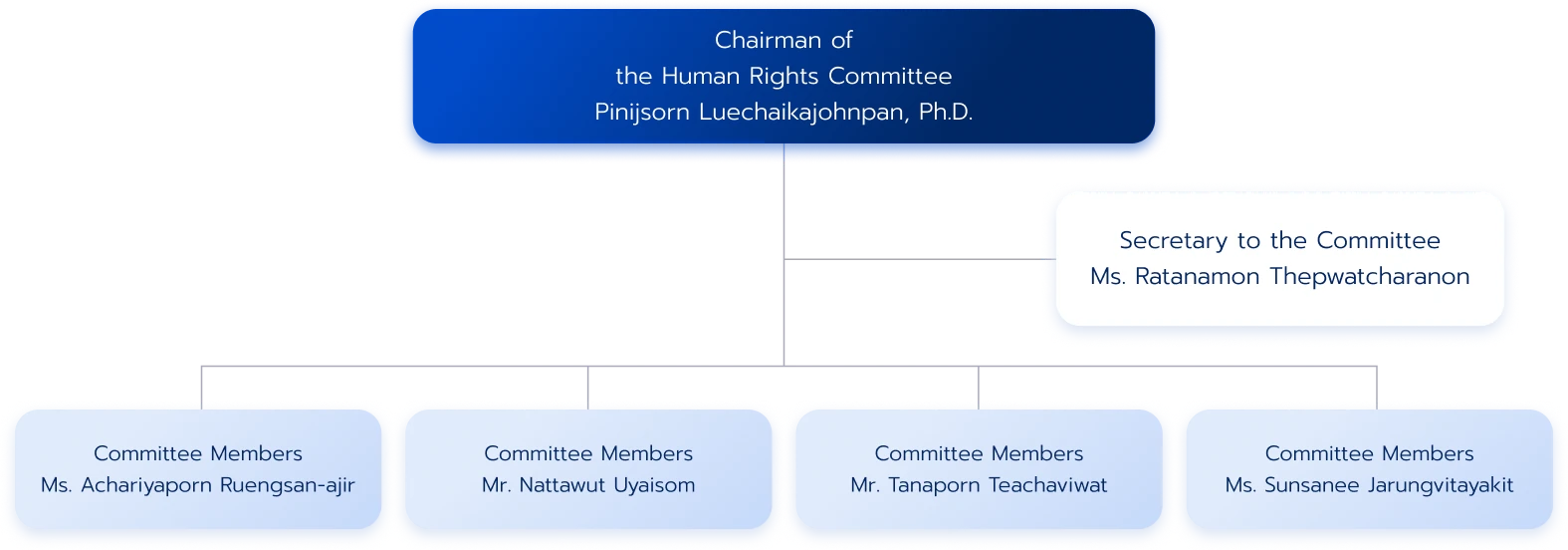
Human Rights Committee Structure
Corporate Culture and Communication
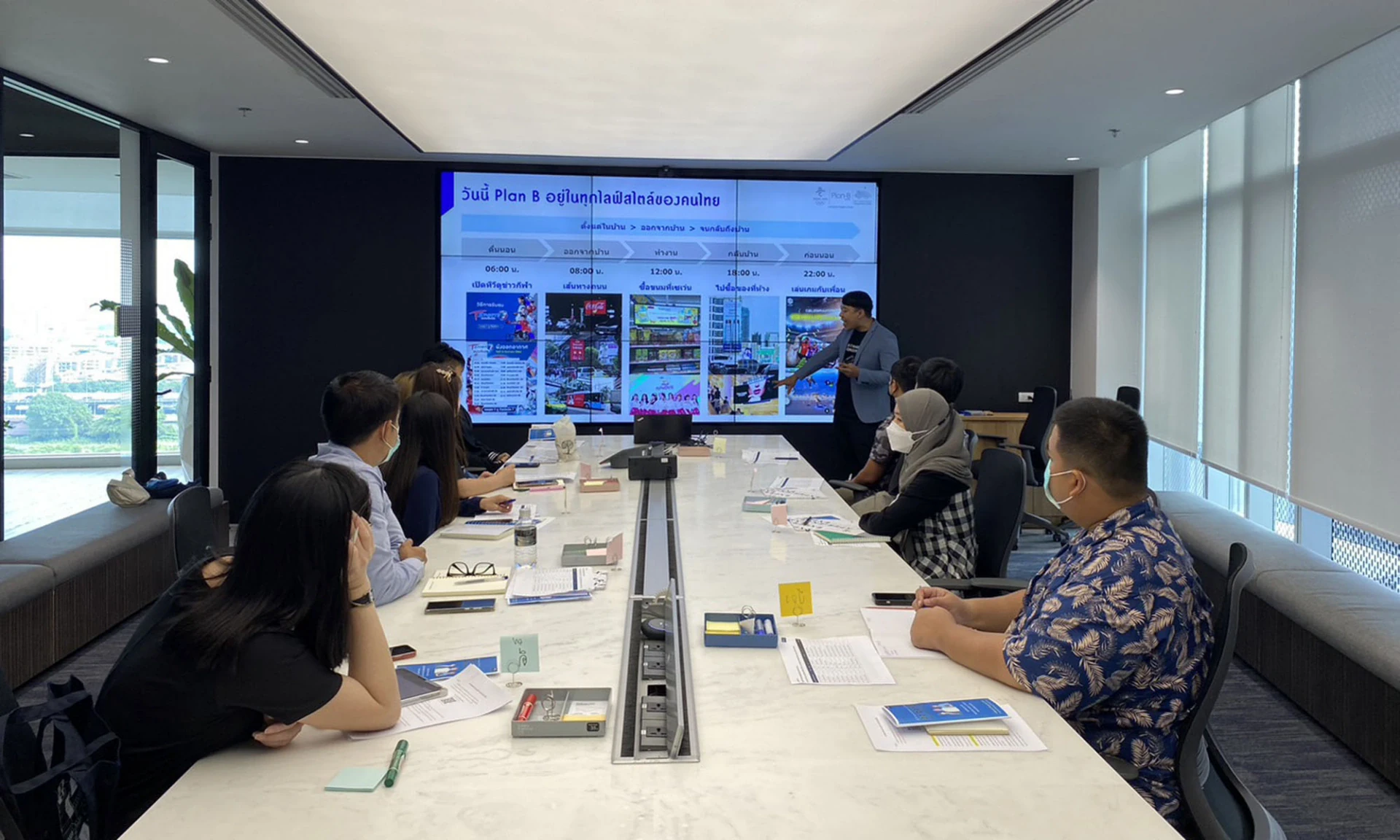
The Company has integrated human rights principles into its new employee orientation programs. In 2025, 100% of employees participated in online training sessions designed to raise awareness regarding the risks of discrimination and workplace harassment.
2025 Performance Summary
The Company successfully achieved its operational targets, with key performance highlights as follows:
- Zero human rights violation complaints were reported through the Company’s various whistleblowing channels.
- Zero incidents of discrimination or harassment occurred within the organization.
- 100% of new suppliers were assessed on labor and human rights criteria to screen for risks at the source.
- 100% of significant business partners were informed of the Human Rights Policy and the Supplier Code of Conduct.
All employees have access to secure reporting channels under the Whistleblower Policy, which guarantees the highest level of confidentiality and protection.

Human Rights Risk Management In The Organization And Value Chain
The Company recognizes the importance of respecting and promoting human rights throughout every stage of our business operations, both internally and across the value chain. This focus is particularly sharpened on high-risk groups, including field staff, subcontractors, labor providers, and surrounding communities. To ensure that human rights risk management is effective and aligned with international best practices, the Company operates in accordance with the UN Guiding Principles on Business and Human Rights (UNGPs), GRI Standards, and Thailand’s National Action Plan on Business and Human Rights (NAP). Consequently, the Company has identified salient human rights issues and established a systematic management framework classified by stakeholder groups as follows:
Internal Risks (Own Operations) focus on safeguarding the rights and safety of employees across various dimensions, comprising:
| Salient Human Rights Issues | Relevant Stakeholders | Key Human Rights Risk Mitigation Guidelines |
|---|---|---|
|
Employees |
|
|
Employees |
|
|
Employees |
|
Value Chain Risks (Value Operations) focus on governing the rights and safety of stakeholders throughout the supply chain and local communities, comprising:
| Salient Human Rights Issues | Relevant Stakeholders | Key Human Rights Risk Mitigation Guidelines |
|---|---|---|
|
Communities |
|
|
Partners / Contractors |
|
|
Employees / Partners / Stakeholders |
|
Guidelines for Promoting the Company’s Human Rights Management System
The Company focuses on fostering a corporate culture that respects human rights through concrete actions, transitioning from a reactive approach to proactive management across the entire value chain. The key guidelines are as follows:
- Capacity Building Providing human rights training for employees, relevant departments, and the executives of business partners. This ensures that all individuals involved in business operations understand human rights principles and can accurately identify operational risks.
- Effective Grievance Mechanism Developing a neutral and secure reporting system for human rights issues that allows for anonymous reporting. This includes defined protection processes for whistleblowers and those cooperating in investigations to build confidence in the system's transparency and fairness.
- Human Rights Due Diligence (HRDD) Conducting regular HRDD with an emphasis on high-risk groups. This includes monitoring the results of impact mitigation for risks identified in the management plan to ensure a process of continuous improvement.
- Governance & Reporting Regularly reporting human rights risk assessment results to the Executive Committee to enable policy-level management. This ensures timely resource allocation for addressing human rights issues and integrates assessment results into the annual performance targets of relevant departments.
All of these guidelines reflect the Company’s commitment to conducting business with respect for human rights across all sectors, aligning with the expectations of society, investors, and business partners while building a strong foundation for sustainable growth. In 2025, the Company received zero complaints regarding human rights violations, and 100% of major business partners were fully informed of the Company’s policies and operational guidelines.
Stakeholders Directly Impacted

Employees

Customers

Business Partners

Communities

Shareholders and Investors