


Environmental Management
Supporting the Sustainable Development Goals
The Company recognizes that climate change is a significant global risk that impacts long-term business and social stability. We are committed to operating under our climate and environmental policies by integrating ESG (Environmental, Social, and Governance) principles directly into our corporate strategy. Our goal is to build Climate Resilience and enhance quality of life through maximum resource efficiency. We focus on mitigating environmental impacts throughout the entire value chain under the Circular Economy framework and prioritize transparency by disclosing information in alignment with the Task Force on Climate-related Financial Disclosures (TCFD) to ensure accountability to all stakeholders.


Goals and Performance Highlights
| Sustainability Targets | 2025 Performance | |
|---|---|---|
| Long term (2026-2030) | Short term (2026) | |
| Established a policy to continuously improve energy efficiency, with a goal to reduce electricity consumption per unit area by 10% by 2031 compared to the 2021 baseline. | Committed to efficient energy management in common areas and air conditioning systems, targeting a 5% energy reduction in 2026 compared to the 2024. | Continuously replacing lighting in advertising media with energy-saving bulbs and currently implementing solar power systems at pilot sites to reduce grid reliance. |
| Maximizing resource utility by repurposing used or expired vinyl banners and bus wrap stickers, with a target to increase value-added design by 10% annually. | Aim to repurpose more than 25,000 sq.m. of used materials per year through innovative upcycling initiatives with partners and communities. | Scaled value-added material transformation projects, creating new products from used vinyl banners in collaboration with strategic partners. |
| Target 100% Green Procurement for all major material purchases by 2030 to mitigate environmental impacts from the start of the supply chain. | Conduct environmental and social assessments for Tier-1 Suppliers based on the Supplier Code of Conduct, covering 100% of new suppliers in 2026. | Upgraded Greenhouse Gas (GHG) measurement standards from Scopes 1 and 2 to include Scope 3, ensuring transparent monitoring across the entire business value chain. |
| Striving to achieve the Zero Waste to Landfill goal by maximizing the reintegration of materials into the production process. Additionally, conducting biodiversity impact assessments for 100% of new media installations to maintain the balance of local ecosystems. | Promoting energy-saving behaviors among employees through internal training and awareness campaigns. | |

Goals and Performance Highlights
Commitment, Challenge and Opportunity

Commitment
The company is dedicated to conducting business while minimising environmental impacts. Our responsibilities include reducing energy consumption, greenhouse gas emissions, and systematically managing waste, while promoting resource efficiency and clean energy — all to advance toward becoming a sustainably growing media organization.

Challenges
- Risks arising from climate change
- Increasingly stringent environmental regulations
- Supply chain management and partner engagement

Opportunities
- Recycling and adding value to residual materials
- Developing eco-friendly advertising media
- Enhancing corporate image in Green Innovation and sustainability
Management Approach and Practices
Environmental and Climate Governance Structure
The Company has established clear roles for the Board of Directors and Senior Management (C-Level) to oversee environmental management systematically. This structure is designed to effectively manage risks and seize opportunities related to the environment and climate change, ensuring that ESG principles are fully integrated into the corporate strategy.
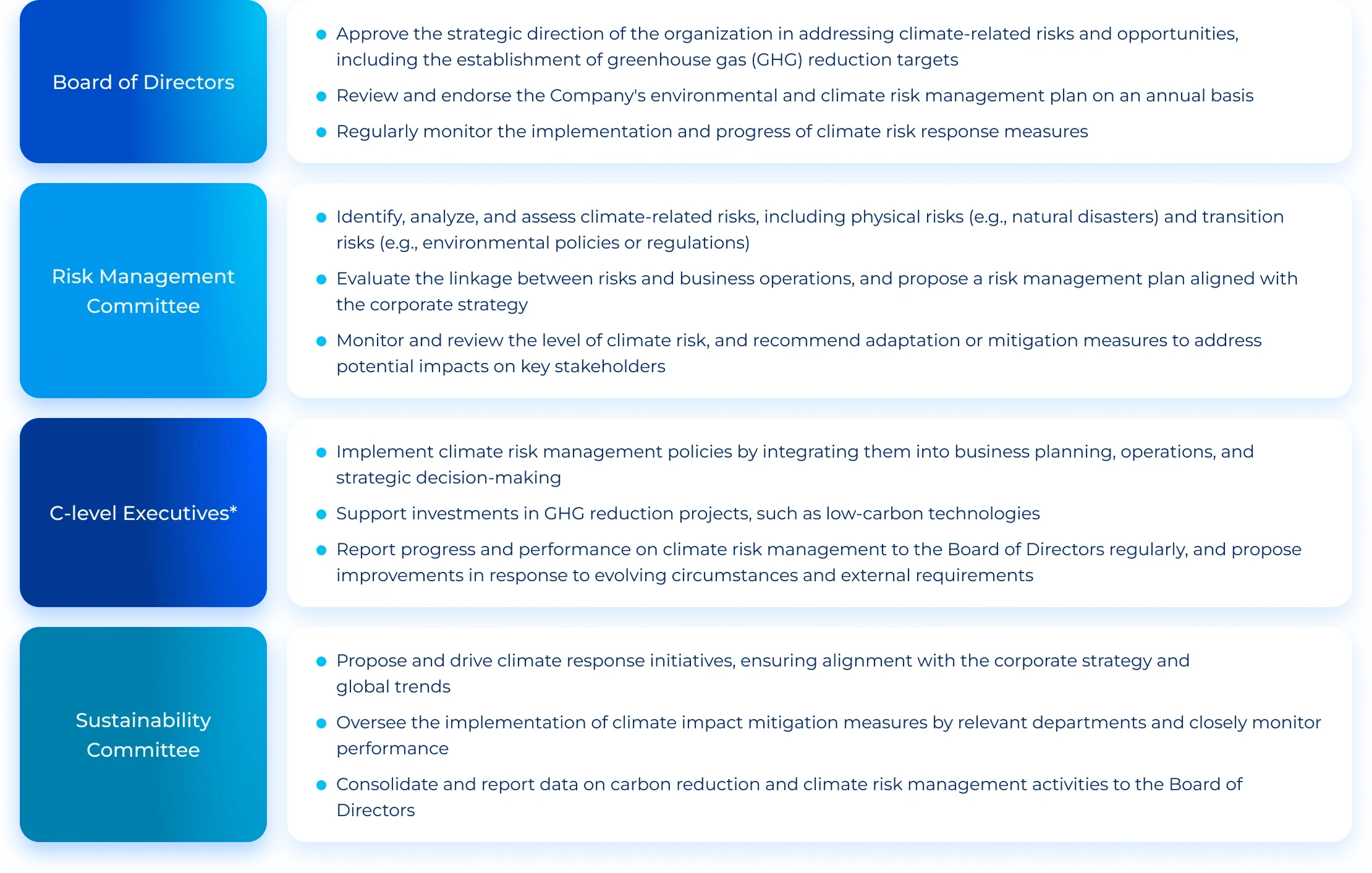
Note: * Mr. Prasong Jarungbenjatham serves as the Chief Financial Officer and is a member of the Corporate Governance and Sustainability Committee of Plan B Media Public Company Limited. He plays a vital role in overseeing and managing risks, as well as identifying opportunities related to the Company’s climate change initiatives with high efficiency.
Environmental and Climate Governance Structure
The Company is committed to reducing both direct and indirect environmental impacts by integrating environmental guidelines into our corporate strategy. We have established measurable short-term and long-term targets, focusing on four key areas:
1. Energy Efficiency and Low-Carbon Innovation
We are transitioning our lighting systems and advertising displays to energy-efficient LED technology to reduce operational costs and our long-term carbon footprint.
- Operational Approach Studying and planning the installation of solar power systems at advertising sites to increase the proportion of renewable energy usage.
- Target Reduce electricity consumption by at least 10% by 2030, compared to the 2021 baseline.
2. Waste Management and Circular Economy
Promoting maximum resource efficiency under the 3Rs (Reduce, Reuse, Recycle) framework.
- Operational Approach Implementing projects to transform vinyl banners into upcycled products and collaborating with supply chain partners to reintegrate installation waste into a comprehensive recycling process. This includes elevating our standards toward Green Procurement by selecting suppliers with clear environmental policies to mitigate impacts from the start of the production process.
- Target Achieve Zero Waste to Landfill by 2027 and implement systematic waste sorting throughout the organization.
3. Climate Change Response
The Company has begun monitoring Greenhouse Gas (GHG) emissions across Scope 1 and Scope 2, aiming to elevate management practices to international standards.
- Operational Approach Expanding GHG emissions measurement to include the supply chain (Scope 3) in the next phase to reflect comprehensive environmental responsibility.
- Target Reduce GHG emissions by at least 15% by 2030, compared to the 2024 baseline.
4. Building Environmental Culture and Ecosystem Protection
The Company focus on driving sustainability from the organization's foundation by raising employee awareness while managing impacts on ecosystems in our operational areas.
- Operational Approach Organizing awareness activities that empower employees at all levels to propose green innovations and resource efficiency ideas, embedding corporate goals into daily work culture. Additionally, we have established Biodiversity Assessment measures before media installations, especially in ecologically sensitive areas, to prevent habitat disruption and promote harmonious coexistence with nature.
- Target Achieve 100% employee participation in environmental activities and ensure 100% of new media installations in significant areas undergo biodiversity impact assessments.
Relevant Stakeholders

Employees

Communities

